Sunday, November 17, 2013

Elect Her!

Last week, I had the exciting opportunity to facilitate an Elect Her training at the University of Louisville.  Elect Her – Campus Women Win is the only program in the country that encourages and trains college women to run for student government and future political office.  Elect Her is a nonpartisan collaboration between the American Association of University Women (AAUW) and Running Start.

The earlier a candidate begins to run for office, the better are his or her chances of climbing the political ladder faster. Twelve of the last nineteen U.S. presidents started their political careers before age 35. When the path to achieve significant political influence and chair a committee is based on seniority, a candidate benefits from being elected when they are young. Additionally, over forty percent of the women who currently serve in Congress began their political careers by serving in student government in their youth. 

A recent study by Jennifer Lawless and Richard Fox showed that the gender gap in political ambition is evident in college students.  My personal experience concurs with their research. Ten years ago at UC Berkeley, I ran for External Affairs Vice President.  I had over 2,000 votes, but lost by 72.  I considered it the greatest failure of my young adult life.  Ultimately, I feel I lost because I didn't believe in myself.  I wish I had the opportunity to gain confidence through a program like Elect Her.  

Regardless, running for student government was one of the most transformative leadership experiences I have ever had. I expanded my comfort zone in ways I never thought were possible.  I gained valuable public speaking experience.  I learned how to network and present myself professionally.  I built relationships with people who are still my best friends ten years later.  Win or lose, running for student government is a leadership endeavor more young women need to pursue. 
 
2013 Elect Her by the Numbers
  • 88 percent of the 2013 participants who ran for student government president WON! 
  • 20 percent more students plan to run for student government and political office.  
  • 100 percent of participants reported that they would recommend Elect Her to a friend.

Saturday, November 2, 2013

Ten Years Ago Today I Realized My Vocation

 *The following may contain triggering language to survivors of violence*

As I get dressed up to go out and celebrate Halloween tonight, I sadly remember how after a night of similar festivities ten years ago changed my life forevermore....

Ten years ago, I awoke to my passion in life.  I realized my vocation was feminism.  For the past ten years, I have dedicated my career and personal mission to advancing the status of women in the world.  For the next decades of my life, I vow to continue to strive for those goals.

I was a sophomore and the fall of 2003 was my first semester being a resident assistant (RA).  On Saturday night, the all male dorm had a Halloween party. I was not officially on RA duty that night, but I went to celebrate.  I saw two of my female residents at the party and talked to them.  When I saw them again on Sunday morning, all of our lives changed.

I don't remember exactly how I was notified, but on Sunday morning, I was informed that two of my female residents were raped that following night.  I was close with these two women.  I knocked on their door, and walked into a dark room of heavy sadness.  The two rape survivors and a few of their close friends were sitting on the floor in silence.  The lights were off.  It felt as if someone had died and we had just come from a funeral. I sat down on the floor with them.  All I could do was just sit there and be with them.  Eventually, they shared their tragic details with me.

The women had been to the hospital, but one of them was still in pain.  Official RA policy restricted me from personally driving her in my car to the hospital.  But, I called up the RA chain and was given permission to go back to the hospital with them.  I waited for her in the emergency room.

I was in shock.  I was overwhelmed.  This was the first time in my life I was exposed to the violence women and girls disproportionately experience due to their sex.  How did this happen?  I knew one of the perpetrators.  He was in one of my classes, and I frequently had to see him after this case.  I don't think he knew I was involved with his situation.  He seemed like a good guy before this happened. I was shocked he was the rapist.

There was only so much I could do to help these two survivors.  The police were not helpful, and the women did not feel supported as they were interrogated.  How did I live in a world where such violence was a common reality?

Sadly, I soon found out that many of my other girlfriends and sorority sisters were also survivors of rape and sexual assault.  I felt deeply compelled to do something about this issue.  After this experience,  all of my volunteer and extracurricular activities were related to feminism.  I should have been a gender studies major, but ended up pursuing an M.A. in Applied Women's Studies at Claremont Graduate University.  The past seven years of my career have been working in the field of gender equality.

Earlier this week, I met up with a girlfriend in her early twenties who is trying to figure out her passion in life.  I shared this story with her.  For better or worst, through this experience, I clearly found my passion in life.  I am deeply grateful to these rape survivors and all the others who have shared their story with me.  I am so inspired by the incredible power survivors have to reclaim their lives and not give up. 

For those still searching for your passion in life, that's OK.  Be patient.  You never know where or when you will learn what it is.  I suggest volunteering or getting involved with different organizations and causes.  You need to learn what you hate to help figure out what you love.  Take new classes, and try to learn new skills.   Check out this previous blog post to find more resources for discovering your passion.

I can't help but end on an uplifting, perhaps cheesy note.  This video by Beyonce on World Humanitarian Day at the United Nations is one of the most inspiring videos I have ever seen.  I wish you all the best in finding and living your passion!

Resources for Rape and Sexual Assault

 Rape and Incest National Network

Bay Area Women Against Rape (the organization that provided resources to these survivors, and that I eventually volunteered with)

Break the Cycle

HollaBack 

V-Day 

National Network to End Domestic Violence


Wednesday, October 30, 2013

Israeli and Palestinian Girls Balling Together

PeacePlayers International (PPI) is a nonprofit organization that uses the game of basketball to unite, educate, and inspire young people in divided communities worldwide. Through year-round, integrated youth basketball programs in South Africa, Northern Ireland, Israel and the West Bank, and Cyprus, PPI has reached more than 60,000 participants since its inception in 2001. PPI prioritizes the involvement of girls in its programs. In Israel and the West Bank, where only 25% of participants in competitive sports are women, more than 70% of PPI’s program participants are female. PPI uses its unique curriculum to not only teach participants how to be confident, assertive athletes, but also confident, assertive leaders. Using a longitudinal model, which engages children from early childhood all the way through adulthood, PPI is creating a league of young women ambassadors for peace. PPI’s Leadership Development Program gives these young women the tools to lead the way towards peace in their local communities and beyond, and to serve as positive role models for younger girls.


PPI-ME 2012 Peace League Tournament “Israeli and Palestinian Girls Balling Together”

by | June 14, 2012 · 2:22 pm

The players take a break from their training to smile for the camera.


Intensity was high!  A year’s worth of hard work and determination at weekly practices and “Twinnings” compounded with the newfound knowledge of PPI – ME’s peacebuilding curriculum was finally culminating in a three hour event.  For the girls participating, it seemed so natural.  For onlookers, it was a pleasure to watch.

Participating teams at PPI – ME’s annual Peace League Tournament hailed from East and West Jerusalem, Pisgat Ze’ev, and Mate Yehuda.  The girls have worked so hard to get to this point, and now, this was my time to see how they have progressed in basketball and leadership skills, attitude and behavior and sportsmanship.  It was beyond the intensity on the court, but rather the chemistry that spoke loud and clear: these girls are a family!

Participants were split into three integrated teams.  Once they were divided, they began playing against each other for a total of three games. Everyone was cheering during the tournament-style event – and not just for their own teams. The girls, who come from not only different areas of Jerusalem, but from very different upbringings, took an interest in the game when they weren’t the ones playing.  They sat in the stands with the other friends and families, and watched and cheered their new-found friends on the court.

The Jerusalem All Stars (an integrated team that competes in the National Basketball League) proved to be the dominating team with some of PPI-ME’s most advanced Palestinian and Israeli players. They made their presence known on the court with an intense defense and a great chemistry on both the defensive and offensive ends of the floor.

It was truly a victory for everyone!  At the end of the event, medals and trophies were distributed to all the victors.  Everyone had a great time!

GO TEAM PEACEPLAYERS!

Check out PeacePlayers on Facebook!

Reposted from

Tuesday, October 22, 2013

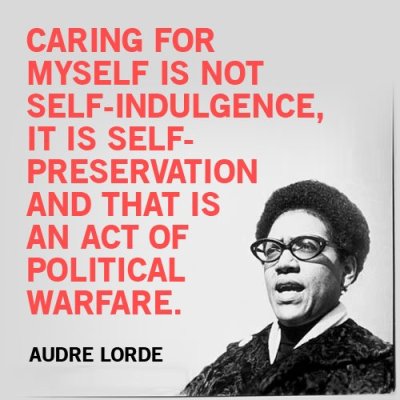
Master Self-Care


What does self-care mean to you?  Where did you learn how to do this?  How do you effectively practice self-care?  How does your community provide care, or how do you provide care for your community?

These are all great questions I got to explore this weekend with a group of fellow young feminist activists at the FemFuture Retreat at the Omega Institute.  FemFuture defines itself as "an experiment in movement-building that develops solutions for sustainability and impact in 21st century feminism."  FemFuture is led by young women Courtney Martin, Samhita Mukhopadhyay, Vanessa Valenti, and Jamia Wilson.  I encourage you to check out their report about The Future of Online Feminism and their recommendations for building a more sustainable feminist movement. Also, read this great article about self-care by the weekend's amazingly talented facilitator Adrienne Maree. 

I can't agree more with FemFuture about the need to insert the topic of self-care into conversations about the evolution of the feminist movement.  Activist burnout is real.  Sadly, so many "feminist" and "women's organizations" are notorious for underpaying and overworking their staff.  In the world of online feminism, even behind the layer of the Internet, activists are brutally attacked.  When the world is rapidly moving towards further discrimination and oppression, feminists activists need to be strong and supported, not burnout and abandoned.

Below are some of my main takeaways from the weekend.  Please add your ideas about what works best for you.  Stay tuned as FemFuture continues to evolve and follow the conversation online via #FemFuture. I'm very grateful to the organizers, my fellow participants, and the Omega Institute for the amazing opportunity to have participated in such a transformative event! Cheers to self-care (that may or may not include a glass of wine)!

Best Practices for Self-Care

  • Regular Exercise                                                   
  • Healthy Eating and Proper Hydration
  • Deep Breathing 
  • Getting Enough Proper Sleep
  • Meditation 
  • Overcome Any Fear in Asking for Help
  • Visit a Wellness Center
  • Talk to Your Resident Assistant or Professor
  • Give Yourself Daily Validation, "What am I most proud of from today?"
  • Give Support to Others
  • Active Listening 
  • Spending Time in Nature
  • Have a Self-Care Buddy to Hold Each Other Accountable (daily text each other about how you practiced or did not practice self-care, do this for a week/month/six-months/etc)
  • Going on a Walk
  • Journal Writing
  • Therapy (The Women's Center in DC offers affordable counseling services)
  • Take a Landmark Education class
  • Spending Time with Friends
  • Checking in with a Mentor or Coach
  • Learning a New Hobby 
  • Use Vacation Time
  • Going to the Movies or Shopping
  • Read a Book 
  • Create a Self-Care Fund for Yourself 
  • Art Projects 
  • Articulating Your Needs for Yourself and Others
  • Incorporating Play into Your Day 
  • Do Whatever were some of your Favorite Things from Childhood
  • Establishing Do-able Time Management Scheduling
  • Unplug from your Phone and Computer
  • Get Grounded through your Senses (smell, touch, sounds, texture, etc)
  • Bubble Baths, Massages, Mani/Pedi
  • Maintaining a Spiritual Practice
  • Schedule Regular Time for Reflection
  • Sit in a Quiet Room Alone and Do Nothing
  • Get Rid of Habits, Structures, or People that No Longer Serve You
  • Find Healthy Ways to Get Rid of Your Anger Such as Boxing
  • Consider Alternative Healing Options 
  • Take a Self Assessment (Strength Finders 2.0)
  • Create Daily, Weekly, Monthly, and Annual Strategies and Practices and Ways to Hold Yourself Accountable  
YOU CAN DO THIS! 

TOGETHER WE CAN MAKE OURSELVES, AND OUR COMMUNITIES MORE POWERFUL FORCES TO DO GOOD IN THE WORLD!


Samhita Mukhopadhyay
Courtney E. Martin
an experiment in movement-building that develops solutions for sustainability and impact in 21st century feminism. - See more at: http://femfuture.com/about/#sthash.xFNa0rxx.dpuf


Wednesday, October 16, 2013

Achieving Gender Parity in the United Nations (UN) System is Possible


At the 1995 Beijing Fourth World Conference on Women, the nations of the world set the goal a of 50/50 gender distribution at all levels of employment within the UN Secretariat by 2000[1].  Thirteen years after this deadline, the UN is far behind in reaching its goal.  According to a June 2009 report issued by the Office of the Special Adviser on Gender Issues, the percentage of women at the most senior positions, Under-Secretary-General and Assistant Secretary-General, are 22.2 percent and 22.8 percent  respectively[2].  Moreover, at the highest level of the Organization, the world has yet to see a female Secretary-General.  The UN can achieve gender parity through enacting flexible working arrangements and policies promoting work-life balance, improving accountability, and implementing real time monitoring, accompanied by adequate funding for each of these endeavors.

The UN must prioritize its commitment to gender parity for a number of reasons, most notably for the purpose of striving for gender equality and for the organizational benefits associated with gender diversity.  Gender parity is inherently necessary to actualize gender equality, a stated goal of the UN in its charter and the Millennium Development Goals.  As one of the world’s foremost norm setting bodies, the UN itself must first abide by its high standards to truly promote gender equality around the world.  Studies from Catalyst and McKinsey demonstrate that increasing the number of female decision makers at the table correlates with improved collaboration and productivity.

A significant impediment to achieving gender parity results from societal pressure for women to be the parent primarily responsible for child and elderly care.  For example, many women leave the workforce for an extended period of time because they are unable to balance raising a family while maintaining a demanding career. As is common practice in the private sector, the UN can create opportunities for employees to telecommute, use flextime, participate in a compressed workweek, or job share arrangements.  To implement these policies successfully, the UN must provide training for staff of all levels about how such flexible working arrangements can be utilized.  To get rid of the stigma associated with taking leave, the UN should remove the requirement for an employee to state the purpose of the leave, and be a model for not having to file a reason. Lastly, the UN can also provide daycare solutions such as onsite facilities, pre-negotiated contracts with daycare providers, and childcare subsidies that are accessible to all.  

Monitoring, reporting and accountability are imperative to achieving gender parity.  Accountability must be broken down to the individual manager and unit level.  The mere existence of potentially effective policies such as flexible working arrangements does not suffice when they are not wholly implemented as a socially acceptable option for employees to utilize. The UN should track requests for flexible working arrangements that come in, as well as the percentage accepted and declined by managers. How well a manager is performing in relation to gender parity as well as their gender sensitivity needs to be a competency for their promotion.

Current statistics on gender representation in the UN exist predominately only as snapshot reports.  Most agencies do not have computerized gender statistics in real time, demonstrating the impact of a given recruitment, selection, promotion, or retirement on a given level or in a given department. To be more useful to managers and to correct distributional imbalances within large departments, monitoring should gradually be refined and further broken down to the divisional level.  In addition, few departments collect data on a number of other key issues affecting their staff’s ability to juggle work-life balance, such as the number of staff members who head single parent households or have problems concerning childcare or care of aging parents. 

Achieving gender parity is absolutely possibleThe System-Wide Action Plan of 2012 (UN SWAP) is a great move in the right direction.  Political will can be strengthened, policies can be formulated and more rigorously implemented, and organizational culture can be positively altered.   Flexible working arrangements and family friendly policies will reduce women’s attrition from the UN by allowing them to achieve a better work-life balance.  Promoting managers on a basis of their performance in regards to gender parity will increase their personal accountability to the issue.  Additionally, real time monitoring of gender-disaggregated data will allow the UN to respond to problems as they arise. By facilitating gender parity, the UN will be aligned to achieve other key goals such as productivity, efficiency, and coherence as well as truly live up to the high values it espouses.

More info: UN Office of the Focal Point for Women 


[1] Resolution 50/164 of 22 December 1995
[2] A/63/364. Report of the Secretary- General on Improvement of the Status of Women in the United Nations System. February 2010.

Thursday, October 10, 2013

Happy Day of the Girl!

     Tomorrow, October 11th is Day of the Girl!  Cheers to the power of girls!  How will you celebrate? In 2011, the UN General Assembly declared October 11th as the International Day of the Girl Child to recognize girls’ rights and the unique challenges girls face around the world.  This year’s theme is focused on “Innovating for Girls’ Education.”  According to the United Nations, “There is … overwhelming evidence that girls’ education, especially at the secondary level, is a powerful transformative force for societies and girls themselves: it is the one consistent positive determinant of practically every desired development outcome, from reductions in mortality and fertility, to poverty reduction and equitable growth, to social norm change and democratization.”
    
     World leaders have recognized that girls are a major target group to achieving the Millennium Development Goals (MDGs).  Goal 3 is completely dedicated to promoting gender equality and empowerment, and Goal 2 is about achieving universal primary education, with a special emphasis on girls. If you haven’t already watched it, I highly recommend you watch this quick video about the “Girl Effect.” In short, the Girl Effect is about the power of leveraging the unique potential of adolescent girls to end poverty for themselves, their families, their communities, their countries and the world.  A great film recently came out called Girl Rising that illuminates the heart wrenching challenges girls face around the world, but highlights girl leaders who are overcoming the odds of poverty, human trafficking, and lack of education.

     My favorite nonprofit organization empowering girl leaders is Running Start, which trains high school girls and young women to run for office.  The earlier you give a girl the skills and confidence to start her leadership, the faster she will climb the ladder to success.  Investing in young women and girls is the most underutilized but proven strategy for breaking the glass ceiling.  

     Together, we can all work together to give girls a better shot at life.  Below are some ideas of how you can empower girls.  Please share your stories of helping girls grow and succeed!

        YOU can make a difference for girls!
  • Mentor or tutor a girl
  • Encourage a girl to share her voice and raise her hand


Friday, October 4, 2013

What is Your Community?


What is feminism? What is a feminist community?  Do you identify as a feminist? I proudly identify as a feminist, and would only be where I am today because of the incredible feminist communities that have supported me along the way.  Interestingly, the Feminist Majority Foundation bases its namesake in the fact the majority of United States population identifies as a feminist.

The beauty and the downfall of feminism is that it allows itself to multiple interpretations.  My personal definition of feminism seeks to end all forms of oppression and discrimination.  Feminism uses gender and sex as a foundational analysis to understand discrimination. Additionally, once such discrimination is fully understood, feminism requires action to end said discrimination.  However, feminism does not just advocate to end sexism or achieve gender equality.  Feminism seeks to end racism, ablelism, ageism, heterosexism, classism, etc.   Feminism creates a world of new possibility and equality for all.   What is your personal definition of feminism?

From my perspective a feminist community is a compassionate, safe space where one can be their authentic self.   People share their vulnerabilities with each other.  But moreover, we help create growth solutions together.  We challenge and support each other in our personal journeys, as well as our quest to make society more equal for all.  People from diverse backgrounds and of all genders feel welcome to learn together.  People do not feel judged or guilty for being who they are. Feminist communities listen to each other, and also discuss divergent viewpoints in a constructive manner.   What is your feminist community?  Or, if you don’t identify as a feminist, what is your community where you feel supported by others who share your values?

Participating in feminist communities has been instrumental in my personal and professional growth.  Fortunately, a strong feminist community is thriving in our nation’s capital.  Click here to see a list of women’s organizations in DC you can join and please feel free to suggest others.  If you don’t live in DC, many of these organizations have chapters in cities around the country so check out if there is one near you. I am honored to have been selected to participate in the 2013 FemFuture retreat and look forward to creating a new feminist community soon!